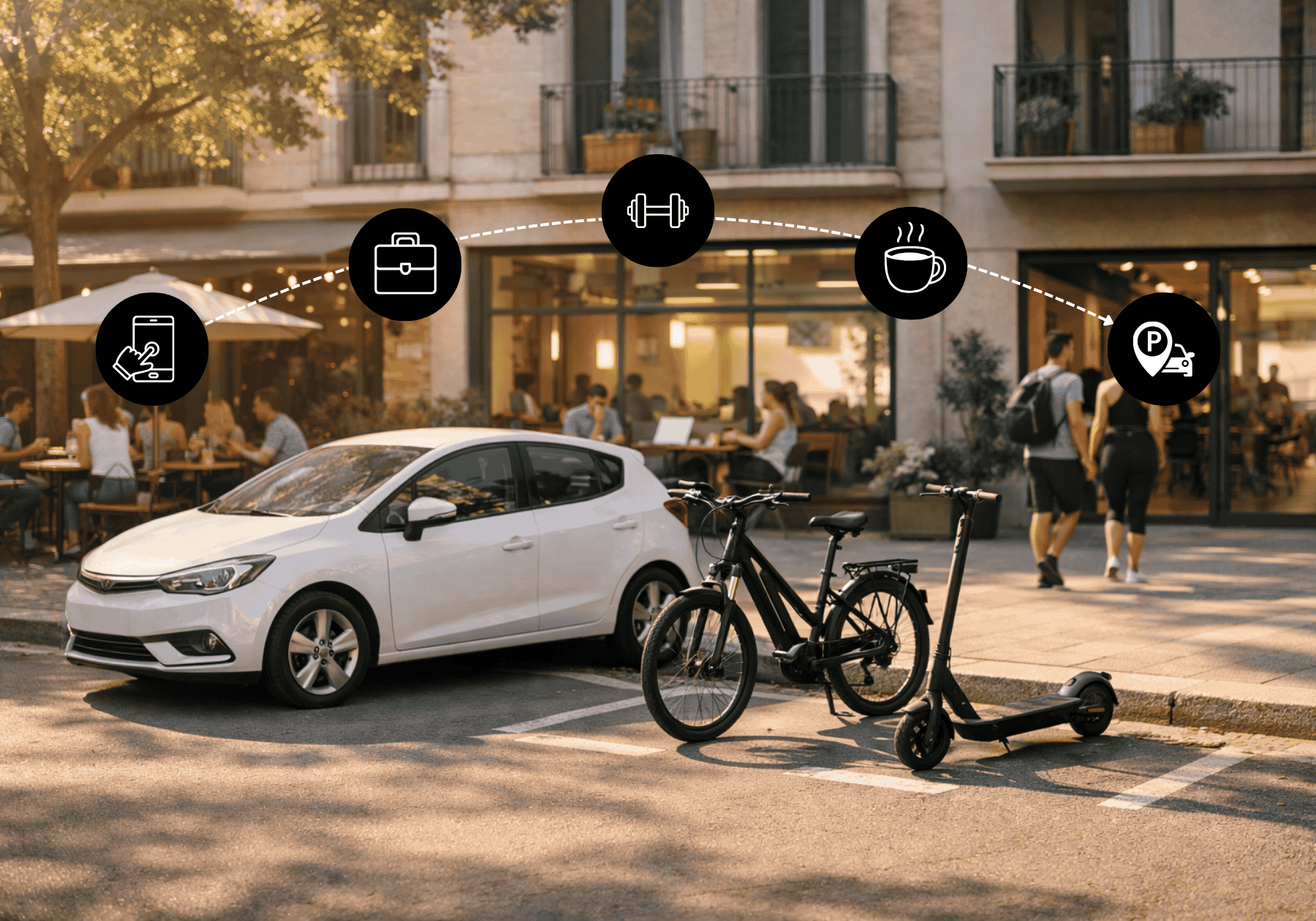
Carsharing is still a relatively new service in many cities, and many people don’t fully understand its advantages until they try it. This is why a strong, unified message is essential: carsharing is personal public transport for everyone. It sits exactly between public transport and taxis - more comfortable than taking a bus or metro, and significantly cheaper than a taxi ride. At the same time, it brings meaningful benefits to the city, supporting sustainability, reducing congestion, resolving parking challenges, and offering an inclusive mobility option that fits modern urban life.
Once local businesses understand this full value, they become far more open to collaboration. Cafes, coworking spaces, gyms, hotels, and retail stores already attract your target audience every day. Turning these locations into part of the mobility ecosystem creates new growth channels that many operators overlook. Local partnerships can significantly increase visibility, adoption, ride frequency, and even improve operational efficiency.
Below are practical partnership ideas that shared mobility operators can use to increase demand, improve utilisation, and build stronger local presence.
1. Turn local venues into high-visibility mobility hubs
Most shared mobility trips start or end near residential buildings, offices, public transport hubs, or commercial streets. These hotspots often sit right next to businesses that would gladly welcome more foot traffic.
Effective partnership opportunities include:
- Preferred parking zones next to cafes, gyms, coworking spaces
- Joint signage outside the venue (Ride here - get a discount inside)
- Charging points placed at partner locations
- Verified safe parking areas that reduce complaints and clutter
Value for operators: better vehicle distribution, fewer parking issues, smoother demand forecasting.
Value for partners: increased foot traffic, enhanced brand positioning, and a modern, eco-friendly image.
2. Co-marketing that actually drives awareness
Shared mobility is still not top of mind for many residents, especially in small and mid-size cities. Local businesses can amplify your presence in a way that feels authentic and community-driven.
What works well:
- QR codes at entrances
- Counter cards with ride discounts
- Joint Instagram or TikTok content
- Food or coffee bundles tied to rides
- Short-term campaigns like Ride to us today and get a free drink
People trust local businesses, so co-marketing through trusted venues often delivers faster awareness and higher engagement than traditional advertising.
3. Loyalty rewards and cross-promotions
Shared mobility is a recurring service, which makes it ideal for loyalty programs. Local venues can become strategic partners in encouraging more frequent rides.
Examples:
- Ride X times this month - receive a bonus from a partner shop
- Restaurants offering lunch discounts for users arriving by your vehicles
- Gyms rewarding sustainable commuters
- Hotels giving guests ride credits to explore the city
These collaborations increase customer lifetime value and create memorable user journeys that encourage repeat usage.
4. Partnerships that improve fleet operations
Local businesses can support not only marketing but also operational optimisation. Many are open to providing small but valuable operational advantages, such as:
- safe pickup or drop-off spots
- micro charging hubs
- small areas for staff to check vehicles
- overnight storage for redistribution
This helps reduce vandalism, minimise dead mileage, and improve service reliability for end users.
5. Events: fast, high-impact visibility
Local events are a perfect opportunity to showcase the convenience of shared mobility. Explore your city’s event calendar: concerts, football games, food festivals, weekend markets, pop-ups, children’s activities and more.
Effective event activities:
- temporary parking or dedicated mobility hubs
- sponsored rides for event attendees
- themed promo codes
- influencer content tied to the venue or event
- branded photo zone for instant social sharing
- gifts or welcome packs for new users
- prize giveaways and small raffles
- on-site new user registration with a welcome bonus
- QR codes for fast sign-up
- co-branded merchandise with the event partner
- exclusive attendee perks (priority parking, extra minutes, etc.)
Well-chosen events can become powerful growth drivers, boosting sign-ups instantly and strengthening brand presence across the city.
Every marketing activity must be evaluated by price vs effect
Creative ideas are valuable, but shared mobility is fundamentally a numbers-driven business. Every collaboration should be evaluated through a straightforward lens: what did it cost, and what did it deliver?
Many of the most effective co-promos with local businesses require little or no financial investment: joint social content, in-store QR codes, welcome bonuses for their customers, or perks for yours. These low-cost activities often perform especially well in early-stage markets.
Before launching any initiative, explore all available promotional formats, request multiple proposals, compare pricing, negotiate terms, and choose the most cost-efficient option.
When working with contractors, always set clear KPIs and maintain the option to stop the activity quickly if performance is poor. This protects the budget and keeps marketing agile.
After each campaign, prepare a performance report and review the results: what worked, what didn’t, and what should be refined next time. Over time, this creates a consistently improving marketing strategy.
With consistent evaluation, even small local partnerships evolve from simple PR moments into measurable, scalable growth channels, improving fleet utilisation, expanding the user base, and ultimately generating more revenue.
Conclusion
Partnering with local businesses is one of the most effective and cost-efficient ways to grow a shared mobility service. Such collaborations support user acquisition and retention, increase brand visibility, improve operational performance, strengthen relationships with local communities, and build trust with regulators. When combined with a disciplined approach to marketing evaluation and a clear message about the societal value of carsharing, local partnerships can transform shared mobility from an isolated service into an essential part of everyday urban life.
Launch your vehicle sharing app in just 15 days with CT Mobility!
No setup fees. Unlimited features.
Free trial period.




.png)